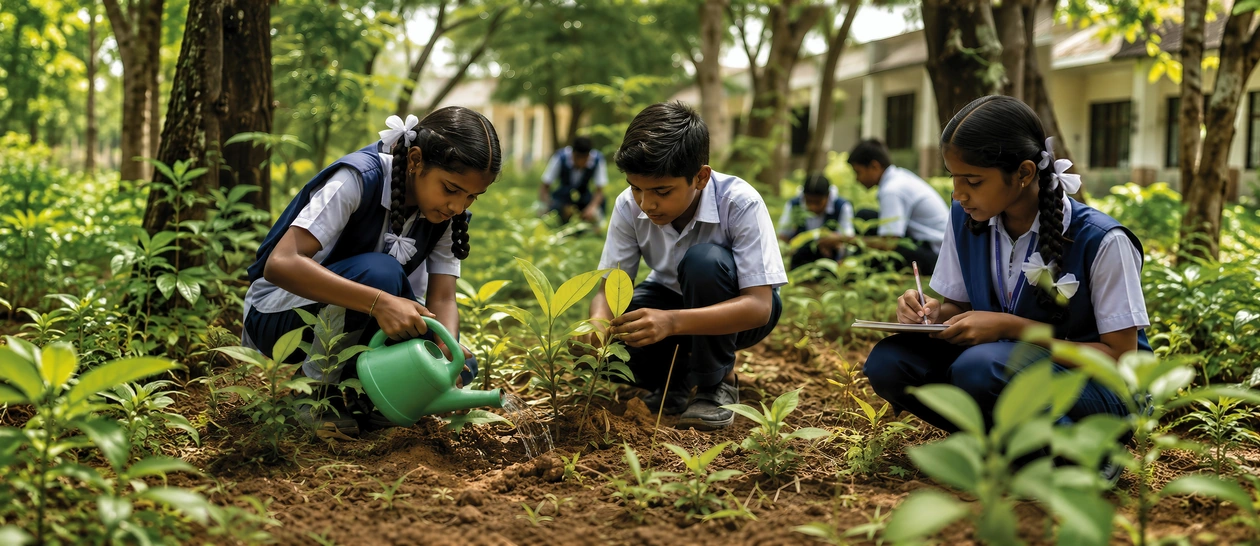
How Forests by Heartfulness is helping campuses across Andhra Pradesh become living classrooms for sustainability.
BY VIJAYAKUMAR KIDAMBI
On World Environment Day 2026, Andhra Pradesh Chief Minister N. Chandrababu Naidu planted a sapling at Andhra University in Visakhapatnam, marking the launch of a partnership between the Government of Andhra Pradesh and Forests by Heartfulness. The initiative aims to transform 1,047 welfare residential schools and junior colleges into carbon-neutral, biodiversity-rich campuses, while offering students the opportunity to experience sustainability as part of daily school life.
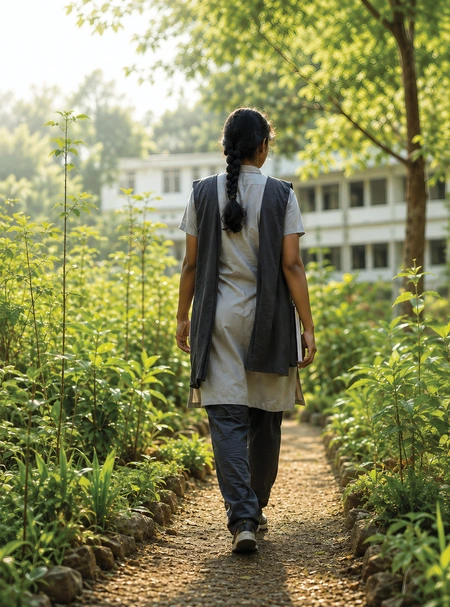
Central to the greening of these campuses is a high-density afforestation model intended to establish thriving, layered ecosystems more quickly, transforming bare or underused land into biodiverse spaces with measurably cooler microclimates.
Established through a signed memorandum of understanding with the Social Welfare Department, Government of Andhra Pradesh, in May 2026, the project advances both the Government of Andhra Pradesh and Heartfulness toward their shared goal of a greener, more sustainable home for humanity. The project aligns with United Nations Sustainable Development Goal 13: Climate Action, India’s commitment to reach net zero by 2070, and Andhra Pradesh’s Swarnandhra vision of net-zero emissions by 2047. The Forests by Heartfulness team developed the project’s end-to-end framework—covering energy, water, waste, green cover, and sustainability.
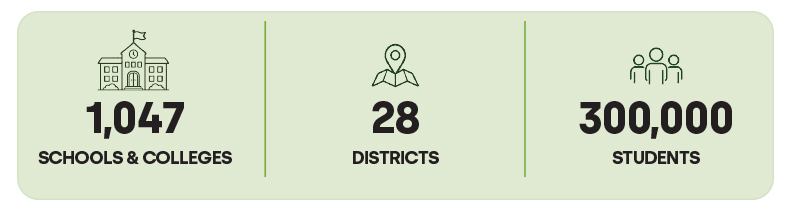
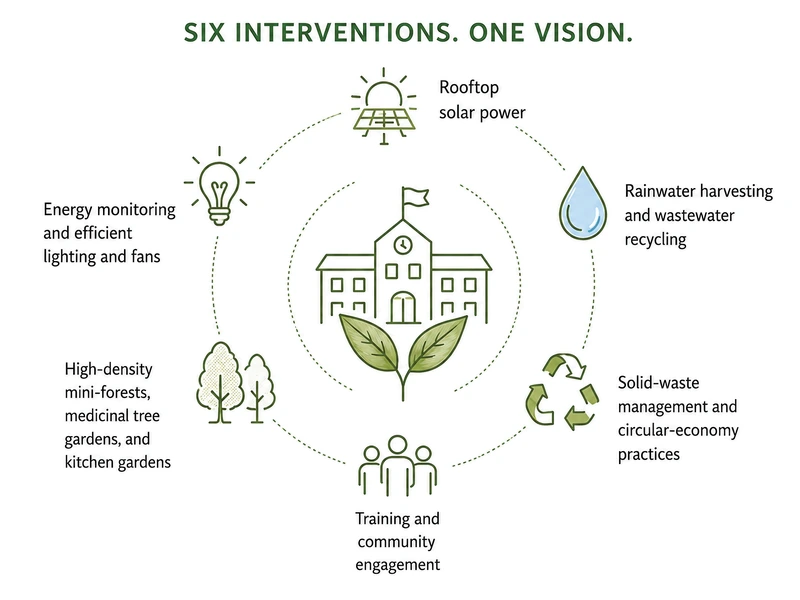
The commitment to net-zero campuses spans 1,047 institutions across 28 districts of Andhra Pradesh in the first phase and will reach more than 300,000 students across the state’s welfare residential system. Together, these institutions generate an estimated 47,500 metric tons of Scope 1 and 2 carbon dioxide equivalent emissions each year. The project’s six planned interventions have a projected offset potential of roughly 48,000 metric tons annually and include:
- Rooftop solar power
- Rainwater harvesting and wastewater recycling
- Solid-waste management and circular-economy practices
- Energy monitoring and more efficient lighting and fans
- High-density mini-forests, medicinal tree gardens, and kitchen gardens
- Training and community engagement
The project also preserves the decades-old trees already on campus, whose carbon-absorbing work has largely gone unnoticed.
Data and progress are tracked using AI to derive insights automatically from drone survey data.
Alongside its environmental goals, the project has an educational purpose. Students will encounter solar energy, water conservation, waste reduction, and biodiversity in daily campus life. The campus itself can therefore become a place where environmental responsibility is practiced as well as taught.
Daaji, the global guide of Heartfulness, teaches that care for the environment follows naturally from care for oneself: as the heart expands, care extends from the self to all creation.
Students are central to the project’s long-term value. Through experiential learning, participation, and institutional support, the campuses can become active centers of environmental awareness and climate action.
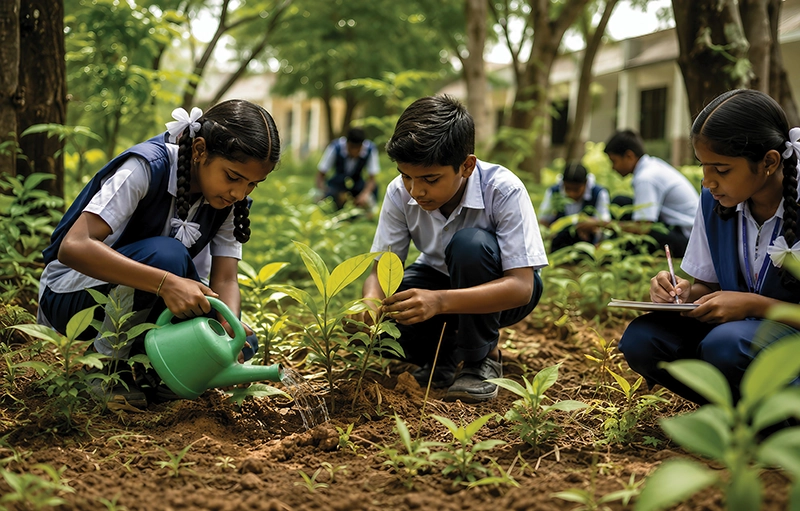
By taking part in these initiatives while in school, students can develop habits of environmental stewardship that extend into their communities and future work. Lower emissions and richer biodiversity will change campuses; the experience of helping create those changes may stay with students long after graduation.
FROM FORESTS BY HEARTFULNESS
Forests by Heartfulness nurtures and protects native, endemic, and endangered plant species through expert-guided nurseries, plantation drives, long-term monitoring, and community participation.

Vijayakumar Kidambi
After spending 38 years working in the upstream oil & gas industry, Vijayakumar Kidambi pivoted into sustainability work, with involvement in Forests by Heartfulness activities. Vijay has been a Heartfulness practitioner for more tha... Read More
