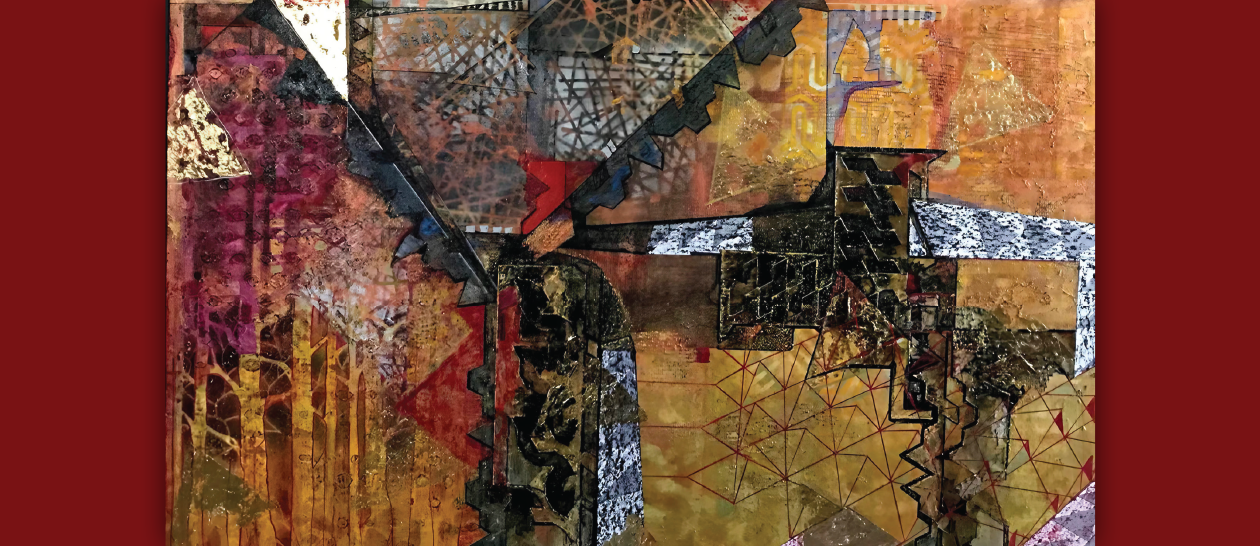
BRINDA MILLER tells VANESSA PATEL how her eclectic approach to art mirrors her approach to life and civic leadership.
Vanessa Patel: Brinda, your art practice spans solo exhibitions, private collections, and public murals. How has this creative trajectory evolved?
Brinda Miller: Honestly, it may look like I’m a major planner, but I never planned anything. I always wanted to achieve something, that’s for sure, but a lot of it has been intuition and impulse—call it what you like. The accomplishment was more for myself: to prove to myself that I could do it, that I’m able, and that I have talent. When you are young, you’re not so confident, but it gets better over the years.
I was a very shy child; it’s also part of the process to learn that it works better to be more outgoing. I see that in my children, too, and I always let them be, because I know they will eventually find their feet and learn from it. Ultimately, it is the talent that speaks, nothing else.
Of course, nowadays you also need PR, a lot of push, and social media. You may or may not agree with it, but the fact is that these are the things that work for you. My mother’s family is very cultured and low-key; my father’s family, on the other hand, was very flamboyant, and he always used to say to me, “You must go out there and push yourself.” That combination really made my career what it is.
VP: Your background includes textiles, drawing, and painting at Parsons in New York. What draws you to different media?
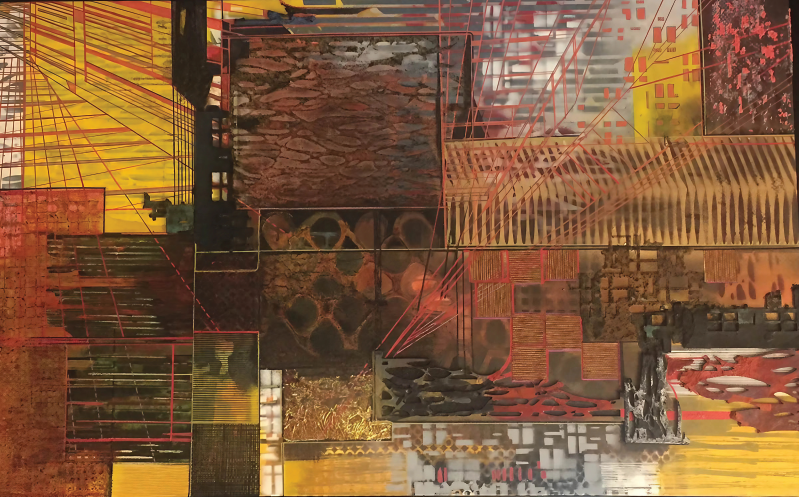
BM: Actually, my creative journey is about mixed media, and I always say that my life imitates my art. A lot of varied things have happened in my life. I’m married to someone from a different community. My parents were also very different. We were never that disciplined, and we didn’t even like wearing matching clothes. We mixed and matched everything, and even the food we cooked was never from a recipe. It was always about combining different types of ingredients. That has been my journey.
It’s the same with my art. It could be a piece of cloth or a piece of paper, and then I mix it up and put a lot of paint over it—it’s very spontaneous, like how I live my life. It’s eclectic. Even the furniture in my home is like that. I have different styles of furniture—some art deco, some modern—and lots of different colors.
I think it has seeped down to my daughters. They are both architects and good artists, which makes it all interesting. Otherwise, I think life would be too boring, so I am one of those who don’t follow a routine. I may wake up late, but at the end of it, I’m totally organized, I feel responsible, and I must see that the work is done. But we are not very time-bound. We are not bound or confined by things; it’s a sort of disorganized, organized way of living.
We mixed and matched everything,
and even the food we cooked was never from a recipe.
It was always about combining different types of ingredients.
That has been my journey.
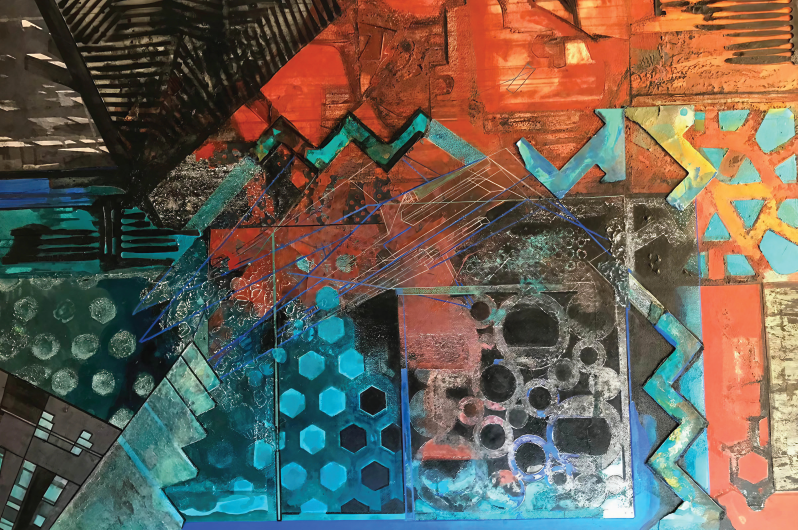
And I’m married to somebody who’s the opposite—he’s very organized—so it’s a good balance, and we make it work.
VP: You have collaborated with many artists. What have you been working on recently?
BM: Yes, I’ve enjoyed working with many artists. You learn so much from each other, and I’m not one of those people who are territorial about my work. I’d be happy even to share my “secrets.”
Recently, I worked in ceramics with the artist Rakhi Kane, and we really hit it off from the beginning, even though we didn’t know each other. I don’t really need to know beforehand whether I’ll be comfortable with a person; part of my job is to make that person comfortable as well. We made some lovely ceramic pieces together, and we recently had a show.
In the past, I’ve worked with other artists I met at the art camps and workshops I’ve attended. That’s when I really got to know other artists. There’s so much to learn and share. We’ve also had a lot of fun together, and I look forward to such projects.
VP: You’re an artist who wears many hats. You’re a curator, festival director, museum trustee, and mentor for several NGOs. How do you navigate these varied roles?
BM: I wouldn’t say there are that many challenges, except for the lack of time—it becomes a little difficult to give my attention to everything. I have to say no to many things that I would like to say yes to.
But I do as much as I can because I do have the ability to bring things together. I do this arts festival every year, which takes up half my time. The other half of my time, I love painting. I find it very therapeutic; it’s like meditation, so I look at it that way.
Yes, the other half of the time is very stressful, but it gives us a different kind of high. It’s not meditative, certainly, but it’s something you feel addicted to at the end. It’s energizing in a different way. It compels you to do things that you thought you could not do, and at the end of it, you feel, “Wow, I did that! I can do anything!” That feeling comes from organizing the festival, whereas painting is something that I can do with my eyes closed. It’s not challenging anymore, I must admit, although I love it!
I do this arts festival every year, which takes up half my time.
The other half of my time, I love painting.
I find it very therapeutic; it’s like meditation,
so I look at it that way.
VP: As director of Kalaghoda Art Festival, India’s biggest multicultural art festival, which you’ve been involved with since 1998, what are your main challenges?
BM: It is getting increasingly challenging, and we’re not getting any younger. But somehow, I’m managing, and the people who work with me are amazing; they’re so passionate about it.
The audiences are not a problem at all. The audience here in Mumbai is fantastic. That’s what keeps us going, because they come up and say thank you for doing this for us, and they know that we’re doing it for them. They’re very appreciative.
What is now a very challenging task is the sponsorship part—the fundraising—because we are relatively new to it. Going and asking for money isn’t something we like doing, but it’s part of the job and requires a certain skill. We could do better.
Earlier, we also had a lot of trouble getting permissions from the local government. I must say it has become much better now; they’re very encouraging, and they’re looking at it as their own now. That is how all governments should be: supporting their citizens, culture, and heritage. We are the ones who have been doing this and survived so many years, maybe because we’ve not had any interference from them either.
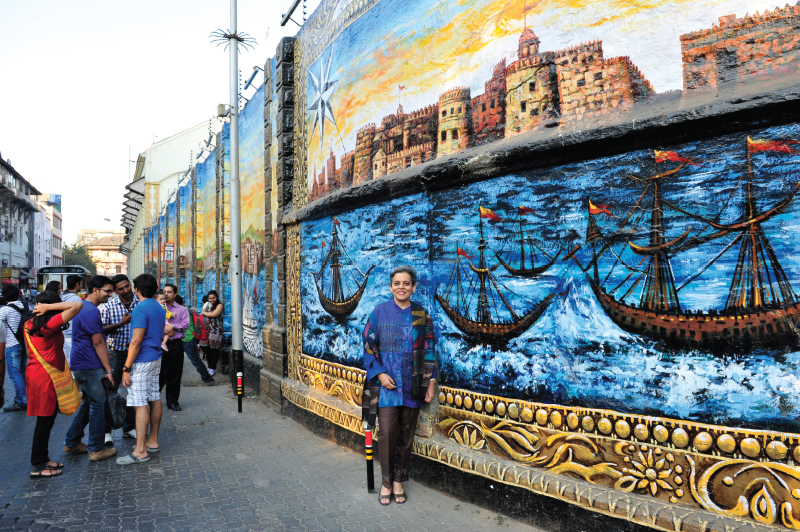
VP: Yes, and you’ve done so much work, even the beautification of the place—you made these beautiful murals at the police café and many other locations around Mumbai, so I’m sure they’re quite appreciative of your involvement.
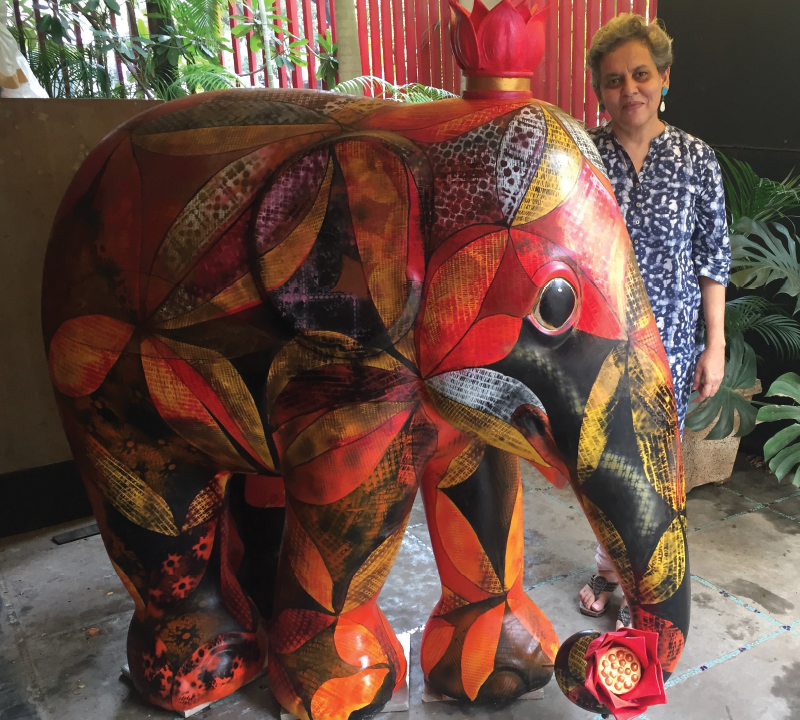
BM: I’m not showing off or anything, but it was just a passion. Having travelled a lot, we’ve seen how art in public spaces makes such a difference to a city. My father had this initiative, “greening” Mumbai, and to me, making a place green or planting a tree is art. I feel that if you can’t put art everywhere, at least make your city beautiful with plantation. That is how we’ve always been brought up to think, so I think it’s in my genes that we appreciate all these things.
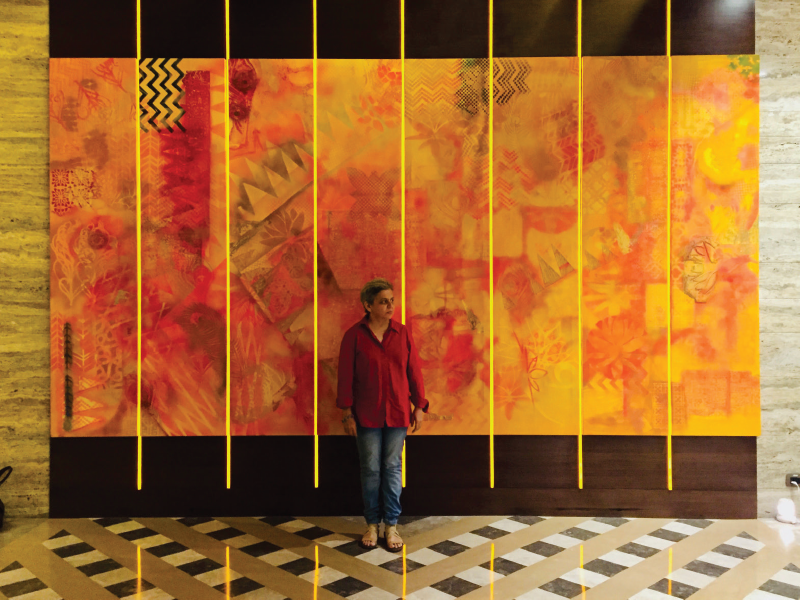
VP: And it’s a way of giving back to the city, too.
BM: Yes, absolutely! And that’s how I started working for the festival—because I wanted to give back something to the city, in a way that was different from the customary ways of lending support, which we do anyway. I wanted to do something creative like this. So, when this festival idea came up, I was very excited. And now, it’s been twenty-seven years—imagine that!
VP: You have clearly followed in the family tradition of being a true citizen. Your father was sheriff of Mumbai, and you have also left your mark on the city in your characteristic style. How do you see the continuation of this legacy?
BM: Oh well, I don’t know about the future. Frankly, I don’t know who’s going to continue this. My daughters are definitely on the same page, but they’re also very busy in their careers, so even if they wanted to, where would they find the time? I don’t force anything on anyone. And I don’t think too much about who’s going to take over from me. When the time comes, it will sort itself out.
VP: Like you, it’s something that they may get drawn to and then get involved; I think the passion has to come from within. What about your work with the CSMVS Museum [formerly the Prince of Wales Museum]?
BM: The museum position happened only because they’ve seen how I work for the Kalaghoda festival. Also, they’re in the same “art district,” and the museum organizers could see how I was managing so many aspects of the event. They put me on their Trust, which is a very prestigious thing for me, and I really enjoy doing that work too.
But of course, that’s one more role now that I’m playing and a little more work in my life. Similarly, I have been asked to get involved in other initiatives, but I think now this is as much as I can do, and I’m doing as much as I can. The festival is coming up this January, so I’m quite busy now.
VP: Are you creating any art for the festival this year?
BM: No, I never have time for that. This time, they wanted me to do the creatives. However, we have a team for that, and everyone follows a template every year, so it’s easier. The theme for this year is Ahead of the Curve. We have already reached the twenty-fifth-year milestone, and this is the twenty-sixth year we’ve been holding the festival. So, now we are just trying to show how we’ve gone beyond this milestone.
VP: Congratulations on this achievement! And we wish you continuing success and creative enjoyment in the future. Thank you very much for your time, Brinda.
Artwork by BRINDA MILLER
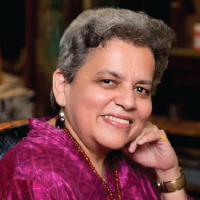
Brinda Miller
Brinda Miller is a Mumbai-based mixed-media artist and gold medalist from Sir J.J. School of Art. She has held 16 solo shows, directed the Kala Ghoda Arts Festival for 25 years, and is a Trustee of CSMVS, help... Read More
