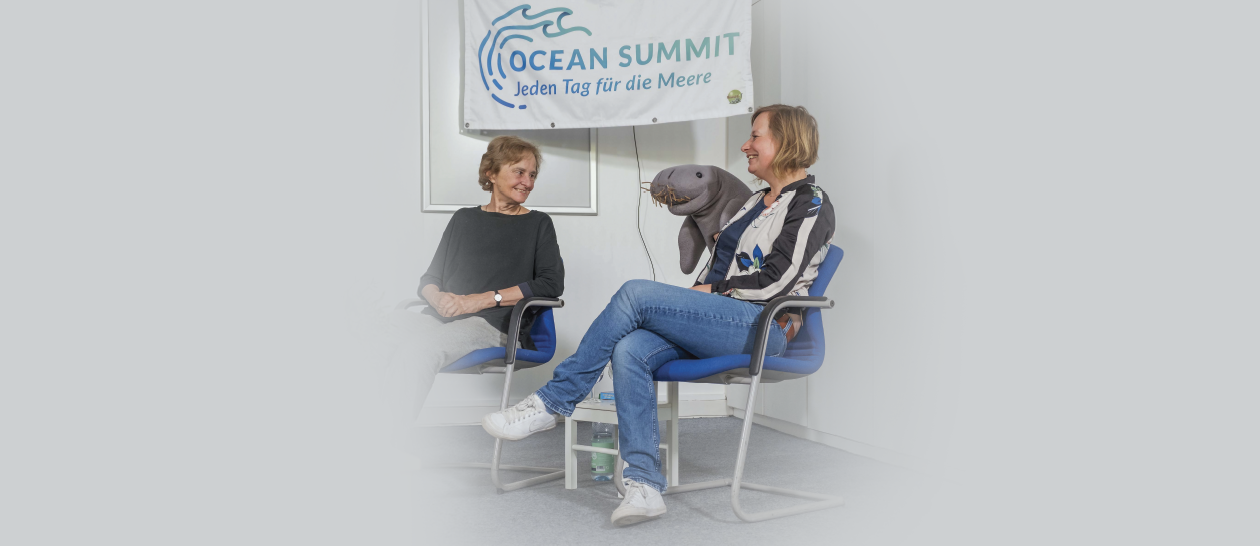
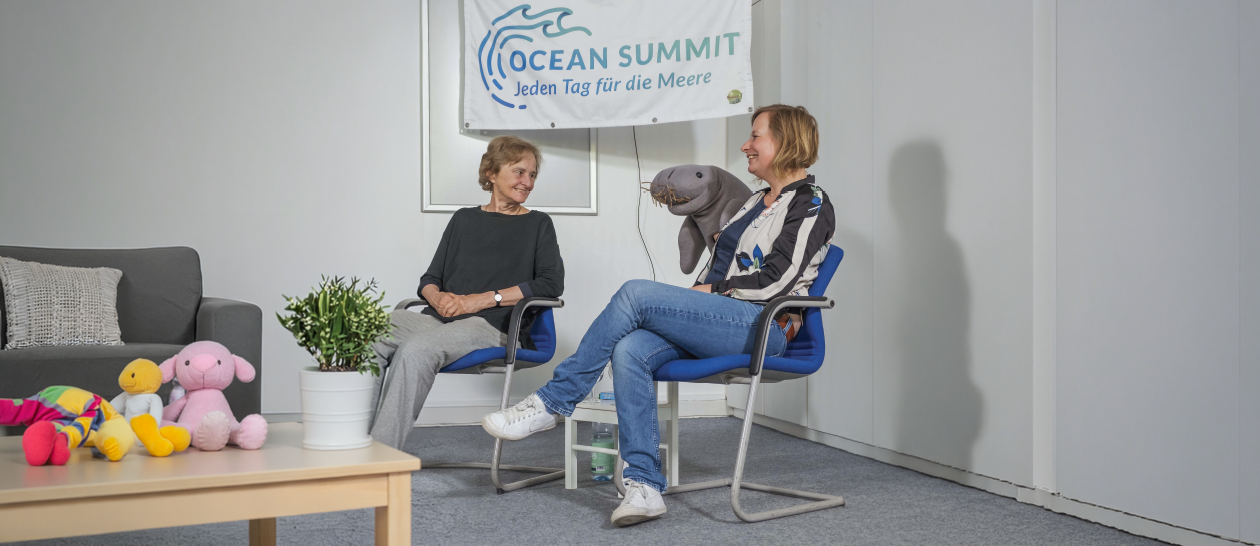
INGA MARIE RAMCKE shares her joyful approach to educating children through storytelling, puppetry, and hands-on exploration of the natural world. In this conversation with VANESSA PATEL, she reflects on how her work nurtures curiosity, imagination, and connection—an early foundation for conscious living.
Inga, how did you find your way into this work of educating children about the natural world?
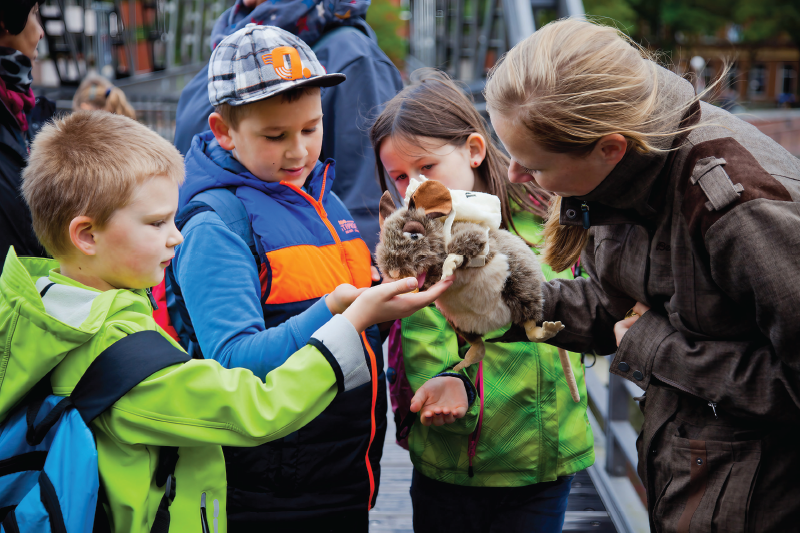
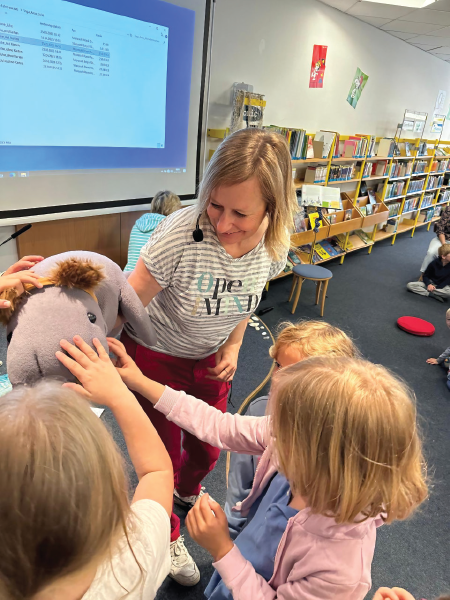
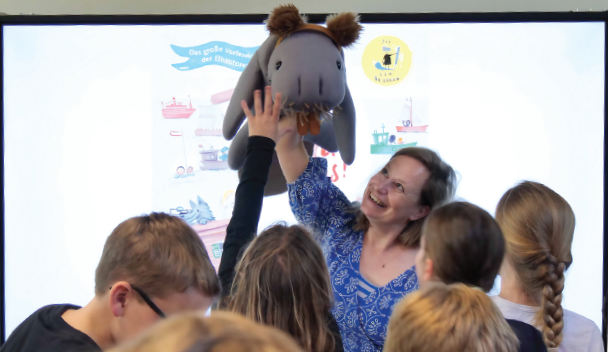
Inga: That’s a funny story, because I have a very weird background. I tried working on many things, and nothing seemed to fit. I’m more of this artsy, free-spirited person, and not a business-minded person, even though I had to work in that area for a while. And at that time, I was unemployed, and a university asked me to take over a program they were running for children. They were looking for someone who could run classes educating children in a park, outdoors. So, I took this up, and after that, I designed one of my own. I thought about my own childhood and playing with my toys—they were really living beings to me, which helped me make my programs more appealing to children. The task that I was given was to explain to children the difference between frogs and toads in the park. And I thought maybe there was a stuffed toy I could use, so the children could touch something and engage their senses. I mean, nature already is something you can smell, you can taste. But when you want to tell the story and just give them pictures, it’s nice, but not enough—it’s not emotionally engaging. I found hand puppets for my program, and the children loved them—they have such vivid imaginations and are so curious and receptive. I’ve really found my place with that work, because I had so much fun working with them. So, I did that for years.
So the characters become the teachers, in a way.
Inga: Yes, you know, rather than just giving them instructions, it’s like the character is saying, “Be quiet because my animal friends could be scared off if you are too loud.”
You’re also the author of a number of children’s nonfiction books. Tell us about those.
Inga: Sure. I wrote a book just on spiders, all different types. One of my books, called Reiseführer für Tiere (a travel guide for animals), is about 25 different animal species and their migratory patterns, written in the style of a travel guide—it offers tips on accommodation, food, and, of course, travel warnings. The first animal in that book is an Indian dragonfly called Shakti, following her migration path over the sea towards Madagascar. Animals don’t have borders, right? And that’s what’s so amazing. The message of spirituality is that we are all one. The natural world includes not only humans but every sentient being. I put so much love into this book.
My work is very collaborative, and I was talking to scientists all over the world. From Chinese scientists, I received pictures of baby panda bears, which are not usually available. The person doing research on salmon in Canada gave me his research pictures. A German researcher gave me pictures of penguins looking at humans—because it’s from the animals' perspective, and the animals need to be represented! In my book, there is a Magellan Penguin, who’s looking at the scientists, like, “Oh my gosh, this guy again! They really need to get off my island!”
One of my books, Die Astronautin von nebenan (the astronaut next door), is about a half-Indian, half-German main character called Maya, and she’s supposed to go on a vacation with her dad, but she falls sick and instead discovers that her neighbor is an astronaut, and so the adventure begins.
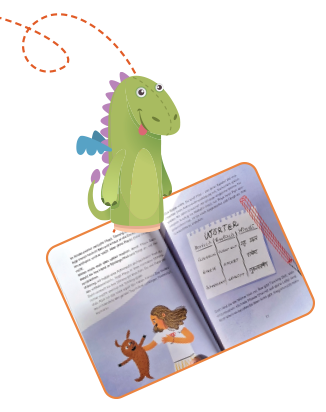
I wrote the book while I was preparing to become a meditation trainer. And while I knew nothing about the subject, I love doing research. There is even a puppet included with the book—he’s a “mermaid pig” called Tönning. He’s the grumpy one who says things like, “I will not go into space if there is no masala chai or a bed to sleep on.” But what was really interesting was the book's spiritual aspect. I was reading what Babuji wrote in his book, Towards Infinity, about how the world came into being. My research led me to all the astrophysics stuff and to how astrophysicists came to a similar conclusion, but several decades later. It’s very new to the scientific world that everything came out of nowhere, and the very first chapter of my book starts with this idea that there was nothingness, and now there is everything, and it’s getting bigger and bigger, wider and wider.
I think the astronaut and migratory path books are the most spiritual books that I have written. With the migration one, I was feeling so connected to the animals, and I was really praying that these animals in the book would make me travel and see the world and spread this idea of unity to others—how the animals are traveling in a world without borders, and that we all have the same needs. It’s just the humans who make it weird.
Another way of learning you promote is through experiments that you’ve designed with collaborators.
Inga: For this, we are a team of three people. The others are a marine microbiologist, Julia Schnetzer, and a chemist-physicist and laser physicist, André Lampe. I met them while doing research and working with puppets to inform people about sustainable development topics in a fun, subtle way, without the schoolbooks. I was going through a very low time in my life when they approached me; they knew my work and wanted that element in their new project. They were both very supportive and understanding, did all the legwork to get funding, and just asked me for my ideas. They also supplied the experiments. But I’m the one traveling, so I’m very much part of the project and carry the experiments wherever I go.
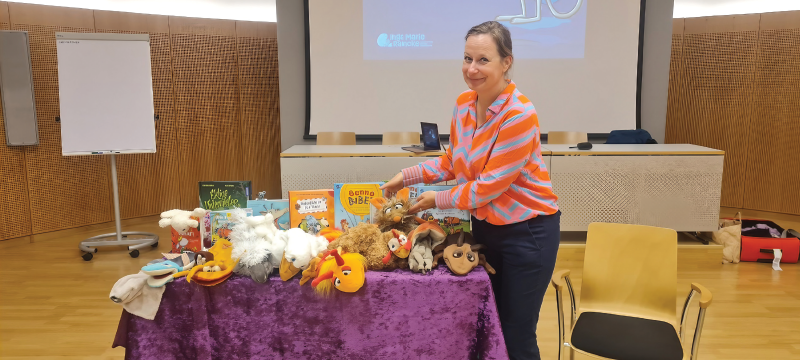
Between the books, the puppets, and the experiments, you’ve built quite a toolkit for engaging children. And on top of all that, you’ve designed puzzles and games, almost like a treasure hunt, to help discover the world around us.
Inga: Yes, you have to make it playful, fun, and light. And it’s a very subtle way of learning. Through humorous stories and a hands-on approach, you experience something, and then you won’t lose it. You don’t have to learn it by heart; you learn it through stories and this personal engagement.
Speaking of personal engagement, people connection is a huge part of your work. You also do city tours.
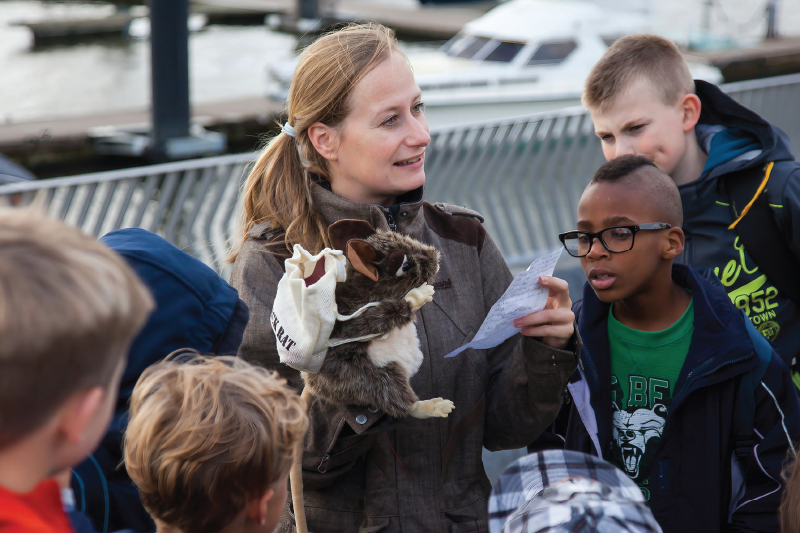
Inga: Yes, I love my city, Hamburg. I’m very emotionally connected to my city, and I love doing city tours. I even wrote a book about it, and there’s a puppet rat called Carly telling the story. I started off doing private tours, but then I started working with children. I gave lectures at Hamburg schools—in the fourth grade, students study the history of their city, which they tend to find theoretical and boring. So I thought this could be done in a more fun way—by letting them experience the city and get to know it in an easy, charming, and funny way. And of course, I always have a puppet with me. The teachers then approached me to do city tours with the children, which was so much fun!
I’ve read that you work in multiple languages other than German. Is that correct?
Inga: My books have been translated into Russian and Danish, but that doesn’t mean that I work in these languages. I don’t speak Russian or Danish, but I do work in German, English, and French. I’ve been to the Kerala Literature Festival and talked about my book about astronauts. I was even able to meet Sunita Williams, gift her the book, and ask if she would maybe hand it over to a US publisher. One of my main goals is to get published in some Indian languages.
Yes, I really hope you do! It’s such a wonderful way to rouse children's curiosity and shape how they relate to the world around them.
Inga: That’s what I love to do. And there’s some spirituality in the books, too. Die Astronautin von nebenan will be translated into Chinese, so that’s my next language, but I would love to be published in Hindi or English.
Inga, it’s been a huge pleasure talking to you about your work! You know, there’s an idea of adding Arts to STEM—science, technology, engineering, and math—to make it STEAM. That’s really what you do!
Inga: Yes, you could say that. That’s funny; thank you!
Inga: Yes, you could say that. That’s funny; thank you!

Inga Marie Ramcke
Inga Marie Ramcke is a science educator based in Hamburg, Germany, and a member of the children’s writer network Elbautoren. Her nonfiction books are published internationally. Through the science communicatio... Read More
