Climate change calls us beyond sustainability toward regeneration, inviting us to restore damaged ecosystems, examine the greed and disconnection behind environmental harm, and cultivate the inner transformation needed for collective action.
ANANYA S. RAO, PhD
In conversation with MAMATA SUBRAMANYAM
Q: Climate news can feel overwhelming these days! What is one story from the climate regeneration movement that gives you hope?
AR: Much of the climate news today can feel disheartening and discouraging. Climate anxiety has become especially common among young people, who are understandably worried about the future they will inherit.
I try to stay aware of positive climate stories from around the world, because they remind us that regeneration is already happening. I came across a story from Brazil about how, thanks to rewilding efforts, blue-and-yellow macaws have returned to the skies over Rio for the first time in more than 200 years. In Japan, researchers have developed a plant-based plastic that could help reduce plastic pollution if it can be scaled. Chile is developing vast wildlife corridors across thousands of kilometers. The UK has reached its lowest emissions level in more than 100 years, largely because of investment in wind energy. Even the ozone layer is showing signs of recovery.
In India, the Aravalli restoration project is another hopeful sign. What I appreciate is that the effort is not only about planting trees. It is about ecological restoration: bringing back forests where forests belong, grasslands where grasslands belong, maintaining the uniqueness of different forest types, and restoring degraded landscapes to their natural character.
What gives me hope is the range of actions now taking place, from renewable energy and ecological restoration to ordinary citizens cleaning beaches, rivers, and neighborhoods, and I hope that others reading about them would feel the same hope.
Personally, I have been involved with Forests by Heartfulness, a mega-greening initiative of Heartfulness Institute. What is important about this work is that it is not simply tree planting. It offers a model for large-scale ecological restoration, conservation of rare and endangered species, and regeneration of damaged landscapes.
One of the most recent projects we have taken up is near Vijayawada in Andhra Pradesh, in the heart of the new capital. The project focuses on ex situ conservation—protecting rainforest species outside their natural habitats—and on protecting species listed on the International Union for Conservation of Nature Red List.
Q: These stories are reassuring, but the larger climate picture can feel overwhelming. At a high level, how is the planet doing right now?
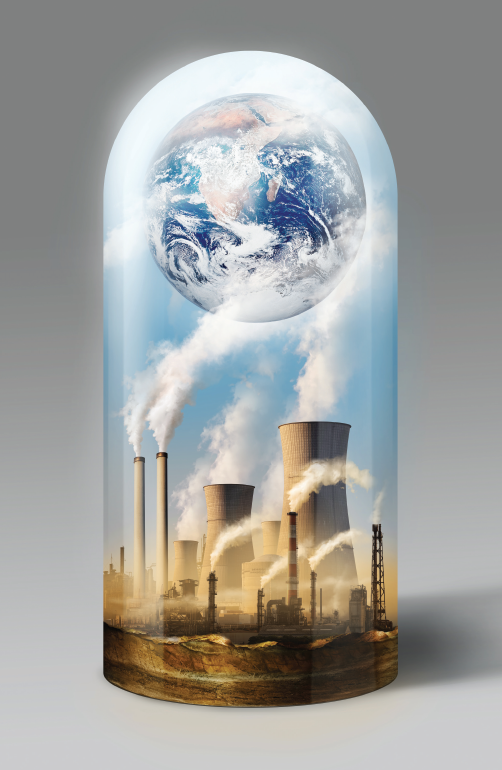
AR: The planet’s systems are under severe strain, and the effects are being felt by humans, animals, plants, and entire ecosystems. We are living through what scientists describe as the sixth mass extinction. The Anthropocene, this era in which human activity has become a planetary force, is witnessing species loss at an alarming rate. Every three hours, one species is pushed to the brink of extinction.
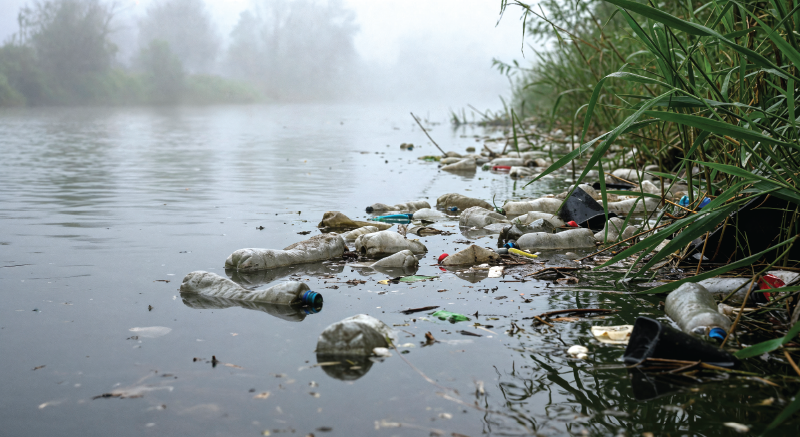
Planetary boundaries are the limits within which Earth’s systems can remain stable and supportive of life. They include climate change, biodiversity loss, freshwater use, ocean acidification, and the condition of the ozone layer. There are nine planetary boundaries. Last year, scientists at the Potsdam Institute for Climate Impact Research reported that seven of them had been crossed, meaning that human activity is pushing Earth’s systems beyond safe limits. Freshwater systems are under stress. Chemical pollution, microplastics, and changes in soil and water quality are affecting ecosystems. Ocean acidification is also increasing. These are not isolated problems; they are signs that the basic systems supporting life are being strained.
As climate scientists, we work with future scenarios. These are not simple predictions; they are models based on different emissions pathways. We ask: What happens if the world continues business as usual? What happens under a low-emissions pathway? What happens under a mid-level or high-emissions pathway?
"When thought is polluted, action becomes polluted.
When thought becomes clearer, action can also change."
Earlier reports by the Intergovernmental Panel on Climate Change used scenarios known as Representative Concentration Pathways [RCPs]. These pathways describe different levels of radiative forcing, a key metric scientists use to estimate the additional warming pressure that human activity places on the climate system. RCP 2.6 represented a lower-emissions pathway, RCP 4.5 a mid-range pathway, and RCP 8.5 a high-emissions pathway.
Recently, I came across an article saying that RCP 8.5 is no longer a useful way to describe the most likely future. For someone who works with climate modeling, that is a sobering realization. It means that some of the assumptions behind earlier modeling need to be revisited, and that our scientific frameworks must keep pace with how rapidly the world is changing.
This is one of the saddest things I’ve come across because it calls into question some of the assumptions that have shaped years of modeling work. In layperson’s terms, the dire consequences once projected from human activity may pale in comparison with what could now be unfolding.
Q: The United Nations Sustainable Development Goals gave the world a framework for 2030. It is clear that we have to think even further ahead. Are there new goals we should now be aiming for?
AR: The Sustainable Development Goals gave countries a shared development framework for 2030. Many nations have aligned their development plans with them, but there is now a growing sense that we need a deeper shift.
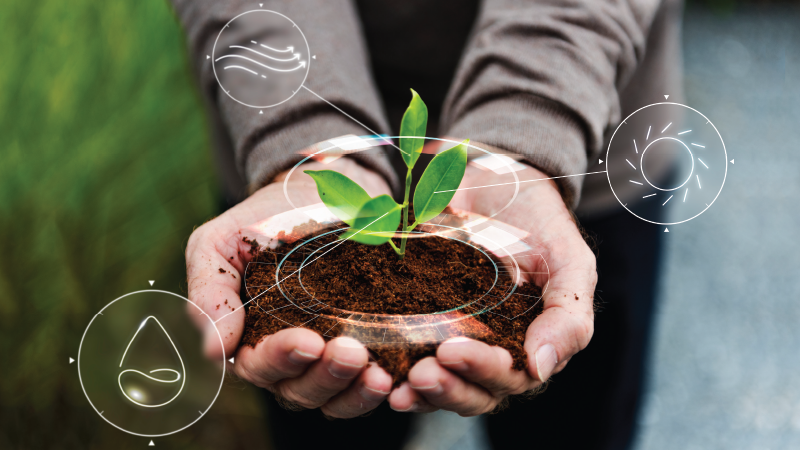
Sustainability asks us to reduce harm and live within planetary limits. Regeneration goes further: it asks us to restore damaged ecosystems, renew the conditions for life, and help the Earth recover its own vitality. So, we must move from sustainability toward regeneration. Whether that means regenerative farming or regenerative practices in general, everything needs to be more focused on regeneration. I think that’s a more future-forward approach to the goals.
I am especially interested in the idea of Global Flourishing Goals. The phrase itself points to an important shift: development should not be measured solely by economic growth but by whether people, communities, and ecosystems are able to flourish. The term "Global Flourishing Goals" sounds so beautiful to me. The Institute I was working with earlier, UNESCO’s Mahatma Gandhi Institute of Education for Peace and Sustainable Development, has also developed a flourishing framework for what it means for human beings to flourish. Is it possible without environmental flourishing? These flourishing goals, in fact, bring about the interconnectedness of human beings with the environment, with all the other creatures inhabiting the planet. So, in that sense, it’s a comprehensive and holistic approach to development.
Another aspect of this Global Flourishing Framework would be to look deeply into human well-being to understand what it means for a human being to flourish. It will then become very necessary to focus on internal work that human beings need to undertake. I strongly believe that unless change happens at the individual level, we will never be able to create change at the global level.
What climate issue feels most pressing to you now, and what kind of action is needed from individuals, communities, and institutions?
Every issue related to climate change is of prime importance, especially today, when many of us sit in air-conditioned rooms. When we step outside, we realize how extreme the planet’s climate has become. In May, we experienced thunderstorms in Delhi, which are expected, but this time they were beyond the normal range. At the same time, erratic weather brought snowfall to Kashmir in the Himalayas, spoiling the apple crop and affecting agriculture. Farmers are among the worst affected by such erratic weather.
What would be the most pressing issue? To me, the most urgent issue is the mindset behind the crisis. We cannot solve climate change only with technology if the same patterns of consumption, separation, greed, and indifference continue.
We all know there is enough evidence scientifically. There is enough evidence without looking at science. You just need to step out of your houses, and you can, through experience, know very well that something isn't right with the planet's climate.
When that is the reality, how do you approach this problem? Is it going to be your responsibility, something that’s going to affect you, your children, your family, your neighborhood, your city?
The awareness that needs to come is this: what is happening outside us has arisen from the way we think. When thought is polluted, action becomes polluted. When thought becomes clearer, action can also change. Governments and institutions have major responsibilities, but individuals and communities also have roles to play. I’m not suggesting that individuals should carry this responsibility while governments stand aside.
I’m not saying that individuals should make all the changes while governments don’t act on them.
"Sustainability asks us to reduce harm and live within planetary limits. Regeneration goes further: it asks us to restore damaged ecosystems, renew the conditions for life, and help the Earth recover its own vitality."
The realization has to happen at every level: individual, community, municipal, national, and global. Each one of us bears responsibility. Can you make that shift? Can you make that difference?
Ultimately, thought pollution is the cause of all other forms of pollution. Thought pollution is a term coined by Daaji, the guide of Heartfulness. What is thought pollution? It is the ego, greed, and jealousy that have brought the planet to its current grim state. Unless this thought pollution is addressed, we cannot take a step forward without falling backward again. Practices such as Heartfulness cleaning help us let go of inner heaviness and complexity, creating more clarity in the heart and mind. Meditation deepens our connection with ourselves. From that connection comes clarity, and from clarity comes the courage to act. These Heartfulness practices are one part of the solution for addressing thought pollution and restoring balance.
Q: What worries you most when you look at the current state of the world?
AR: I have daily exposure to climate data, including current data, data on the past 100 years, and projections for future scenarios. What worries me most is that many people still do not feel the urgency of action.
It’s not about creating panic, but it’s also not about waiting for things to change in the next 20-30 years. The action must happen right away, right now, and that kind of urgency is not seen in people.
"The crisis is rooted in disconnection. Restoring connection—with ourselves, with one another, and with the natural world—is essential to restoring balance to the planet."
The main thing I would say is needed for this action to come about is inherent kindness. Kindness expands the circle of concern. It helps us feel the suffering of other people, other species, and the planet itself.
With all the war we are seeing, the emissions it produces are staggering. We rarely speak about this aspect of war: its cost to the planet, and what it reveals about our lack of kindness toward other beings.
Q: Beyond familiar personal actions like recycling and reducing food waste, how can individuals with no climate background contribute to regeneration at a larger scale?
AR: Yes, at an individual level. Recycling, using reusable bottles, upcycling, and reducing food waste all matter. But I think now is the time to scale up, even as an individual with no climate experience.
Start where you live. In an apartment complex or neighborhood, people can form a committee to work on food waste segregation, e-waste recycling, composting, plastic and paper recycling, and partnerships with local organizations. From there, the effort can expand to the block level, the municipal corporation, the city administration, and even state-level policy conversations. When people organize locally and represent their communities, small actions can begin to influence larger decisions.
Q: We began with hope, and I would like to end there. What gives you hope now?
Around the world, people are waking up to interconnectedness—the human species' reliance on everything around us, from birds and bees to plants and other animals.
I think there has been a little more awareness over the last two or three years, especially after COVID, which forced many people to pause and notice their surroundings. Some began gardening, growing food, or reconnecting with the natural world. And although most of us have gone back to our regular lives without much of a change, there is still a large section of humanity that is much more aware of everything happening around us. That awareness is prompting much more action.
Many IT professionals or people with a regular job have quit their profession and are moving back to the villages, moving back to their childhood homes to try and regenerate the land, work with the soil, make their hands dirty, grow something, live more sustainably, just because they want to feel the difference that they make to this whole situation, and that is very heartening to see.
Initiatives such as Forests by Heartfulness also give me hope because they show that ecological restoration can be practical, organized, and rooted in care for rare and endangered species. Over 2,000 acres of forest have been rewilded in Madhya Pradesh, the largest state of India, and in Gujarat, we are taking up the Aravalli work ourselves, thanks to Daaji’s vision. These projects focus not only on saving rare, endangered, and threatened plant species, but also on propagating them. He is also doing this with the help of tissue culture, developing protocols for some extremely rare plant species, including those with far fewer than 100 individuals remaining in the wild. These efforts help me stay positive about where humanity may be heading. When we develop a deeper connection with ourselves, we begin to feel a deeper responsibility toward everything around us. When this connection deepens, nobody needs to tell us to take action or make a difference to the planet. It becomes a felt duty.
The crisis is rooted in disconnection. Restoring connection—with ourselves, with one another, and with the natural world—is essential to restoring balance to the planet.
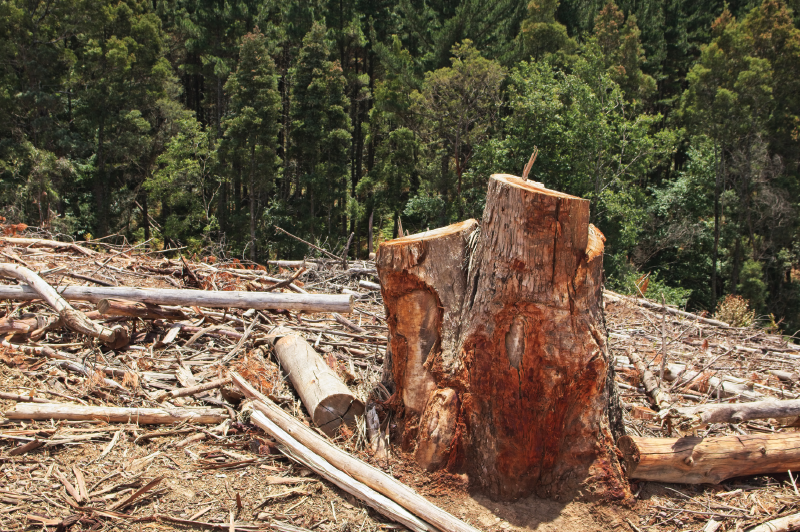
FROM FORESTS BY HEARTFULNESS
Forests by Heartfulness nurtures and protects native, endemic, and endangered plant species through expert-guided nurseries, plantation drives, long-term monitoring, and community participation.
Ananya S. Rao
Dr. Rao is a climate scientist specializing in climate adaptation, terrestrial carbon cycle dynamics, and ecological restoration. She serves as Lead for Climate Adaptation with the United Nations Development P... Read More

Mamata Subramanyam
Mamata, a long time Heartfulness meditator and trainer, is the social media editor for Heartfulness Ma... Read More
